Understanding health impacts of drinking water quality : Why it is important?

Updated: Jul 30, 2023
Drinking water sources are broadly divided into two types. The structures such as piped water supply, handpump, sanitary well are protected, preventing the contaminants entering into the system, hence considered as improved type. On the other hand, rivers, lakes and ponds, usually carry loads of impurities, hence water may not be fit for human consumption. These are called unimproved types.
Groundwater is another reserve of freshwater. In raw form, groundwater quality is generally safe and meets drinking water standard. However, several minerals present in groundwater can change the characteristics, reducing its potability particularly when they existed at elevated levels.
Drinking water contamination: the human interference and natural risks
The contamination in drinking may appear in several forms. The most common have the biological origins and can be related to any of the routes that contains bacteria, virus or protozoa etc. These may cause serious health problems, hence water supply system requires to build a good defense against these. Physical impurities in water affect the appearance, taste and odour. Theses are relatively easy to manage, but many instances these are ignored.
The presence of chemicals and radiological substances in drinking water sources are another form contamination. Geogenic type are those occurring due to natural causes, mainly through rock-water interaction (Saha, 2014), but human interferences such as mining activities, waste disposal and extensive agriculture and urbanization are increasing the contamination worldwide.
Unlike the biological contamination which can impact human health immediately, the groundwater chemical contamination are chronic and it may take months or years before the these manifest itself.
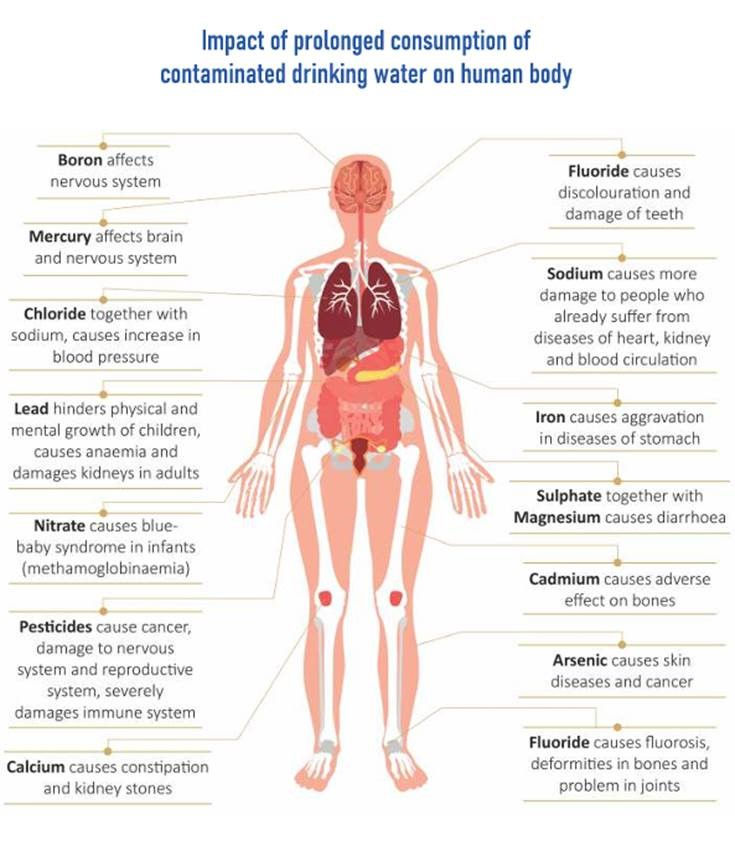
Source: Drinking Water Quality Monitoring and Surveillance, Ministry of Jal Shakti,Oct 2021
Deteriorating groundwater quality
The Lancet Journal (March 2020) has called the ground water contamination problem "underappreciated" even the effects can sometimes cause debilitating disease and deaths. Groundwater-quality studies have demonstrated that for the many countries it has noticeably deteriorated in recent years (Rajesh, 2019). Arsenic in drinking water is a global problem affecting countries in all the five continents. Fluorosis caused by fluoride from drinking groundwater has been reported in several parts of Africa (Kwai, 2016). So, high arsenic presence in 86 districts of 10 States and high fluoride prevalence in 230 districts of 19 Indian states are opportunities to rethink.
Drinking water quality tests
Collection of drinking water quality data and monitoring the samples enable us to take informed decision. This requires massive investments in building institutional mechanism to conduct regular tests. Developing low cost test methods, capacity building of the staffs, storage of data are some of the urgent requirements. Innovative treatment methods for the community or households are needed, hence participation of the industries and institutions .


Comments